Tags
Beach, California, Free, Hiking, Lighthouse, Museums, National Park, Travel
While California might be known for the soaring granite of Yosemite and the giant Sequoia and Redwood trees found in myriad national park sites around the state, Point Reyes National Seashore preserves an equally stunning landscape. Furthermore, visitors to Point Reyes will find far fewer people in the park than at other national parks in the state.
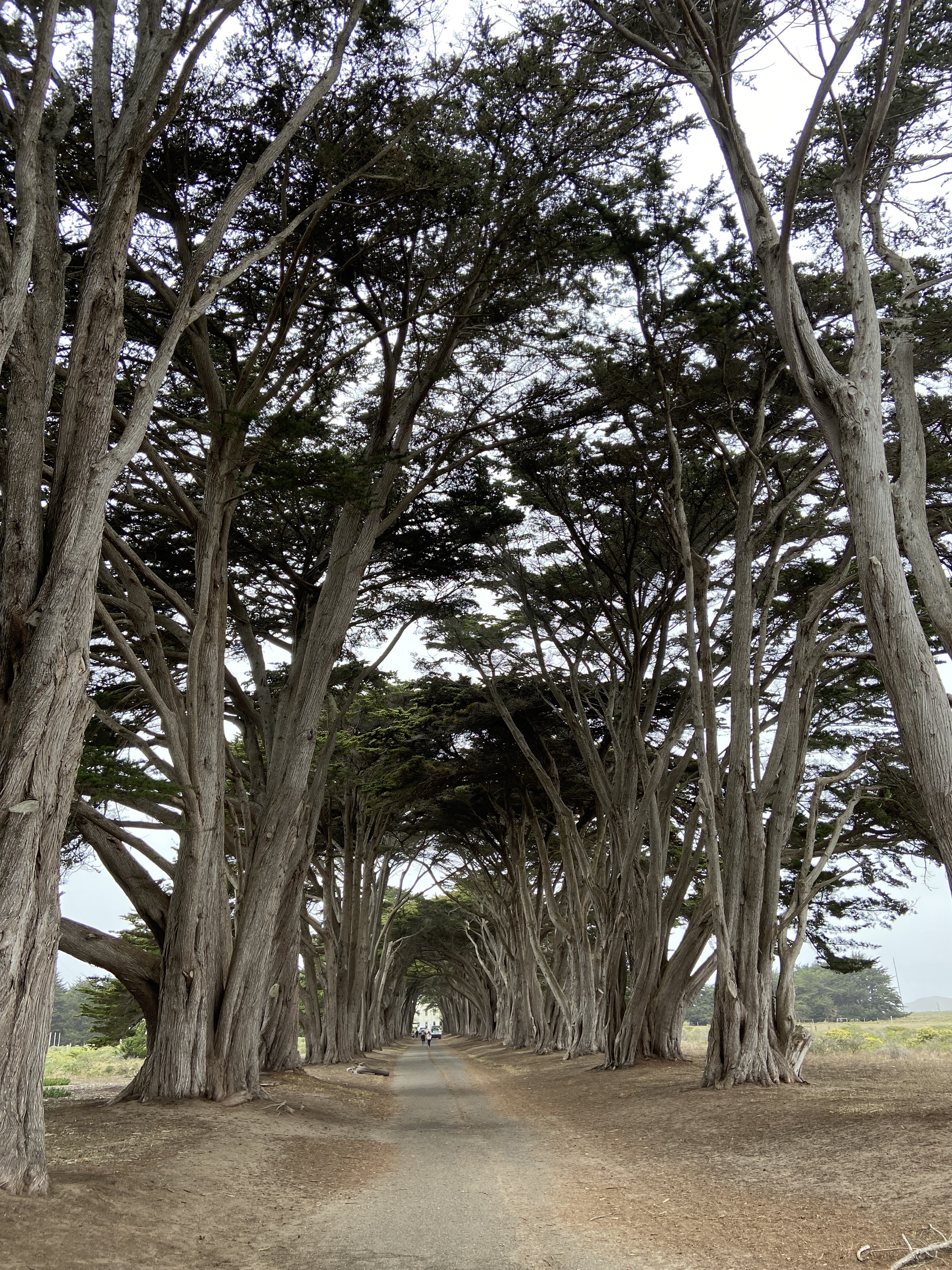
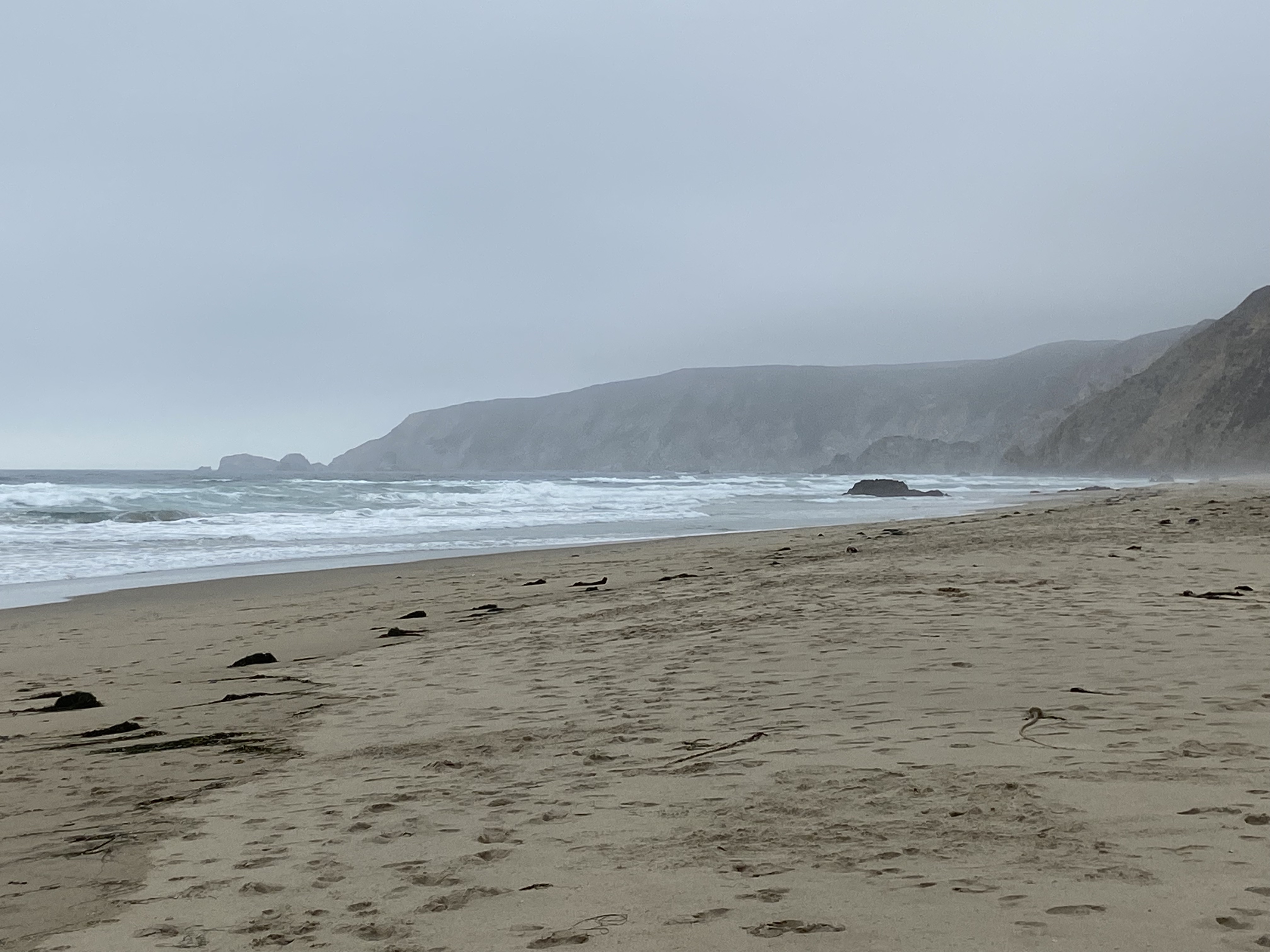
Point Reyes is located on a narrow strip of land, which is only partially connected to the mainland, along the California coast just a bit north of San Francisco. The park is expansive, with few roads through the park and wide open spaces. Visitors can orient themselves at one of the visitor centers, one of which has a nice little museum that familiarizes visitors with the history of the area and the different sites one can expect to see there. Coming into the park from the east, visitors will first see large rolling hills painted golden yellow. Fog often covers the national seashore, and you can already often see opaque white clouds above the hills as you drive toward the ocean. Half the fun of visiting the park is driving through the wide open spaces, seeing the hills covered with grasses and sometimes the local fauna–the cows that are famous for the cheese their milk helps produce. There are also plenty of places to stop and explore the area. Since the park is a national seashore, Point Reyes is known, in part, for its beaches. There are many different beaches to visit. We stopped at several, including Kehoe Beach. Beginning in the rolling hills, we walked through brush and other intriguing plant life before reaching large sand dunes that eventually led out to the Pacific Ocean. We explored the beach, looking at the towering rock formations along the outer edges of the coastline, the sandy beaches stretching out right in front of us, and the crashing waves with whitecaps as the horizon stretched as far into the Pacific as the eye could see.
We also stopped at the Point Reyes Lighthouse, a squat white structure that stands at the tip of the peninsula in Point Reyes, seemingly at the edge of the world. On the day we visited, dense fog prevented us from even seeing the ocean that was right in front of us as the cliffs dropped straight into the saltwater. In fact, the fog was so thick that we could not even see the lighthouse from the viewpoint above it. We decided to be patient and wait to see if the fog cleared even a bit, and our patience paid off! For half a minute we were able to glimpse the lighthouse and outbuilding as they perched on a small outcrop of rock, alerting sailors to the treacherous rocks below.
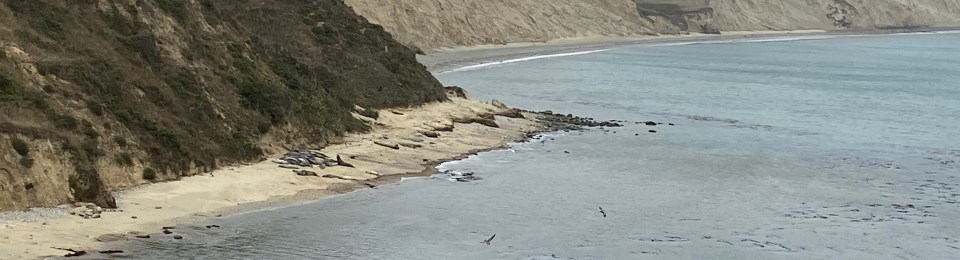
On the opposite side of the peninsula, we stopped at the Chimney Rock trailhead, where we walked a short trail along the coastline to a curve in the landscape where Elephant Seals were sunbathing as scores of pelicans flew around the small bay, diving quickly into the water to scoop up fish. Since the area was on the opposite side of the peninsula, the fog here was less dense, and we were able to see all of the different animals and the beautiful rocky shoreline clearly with not another person in sight.

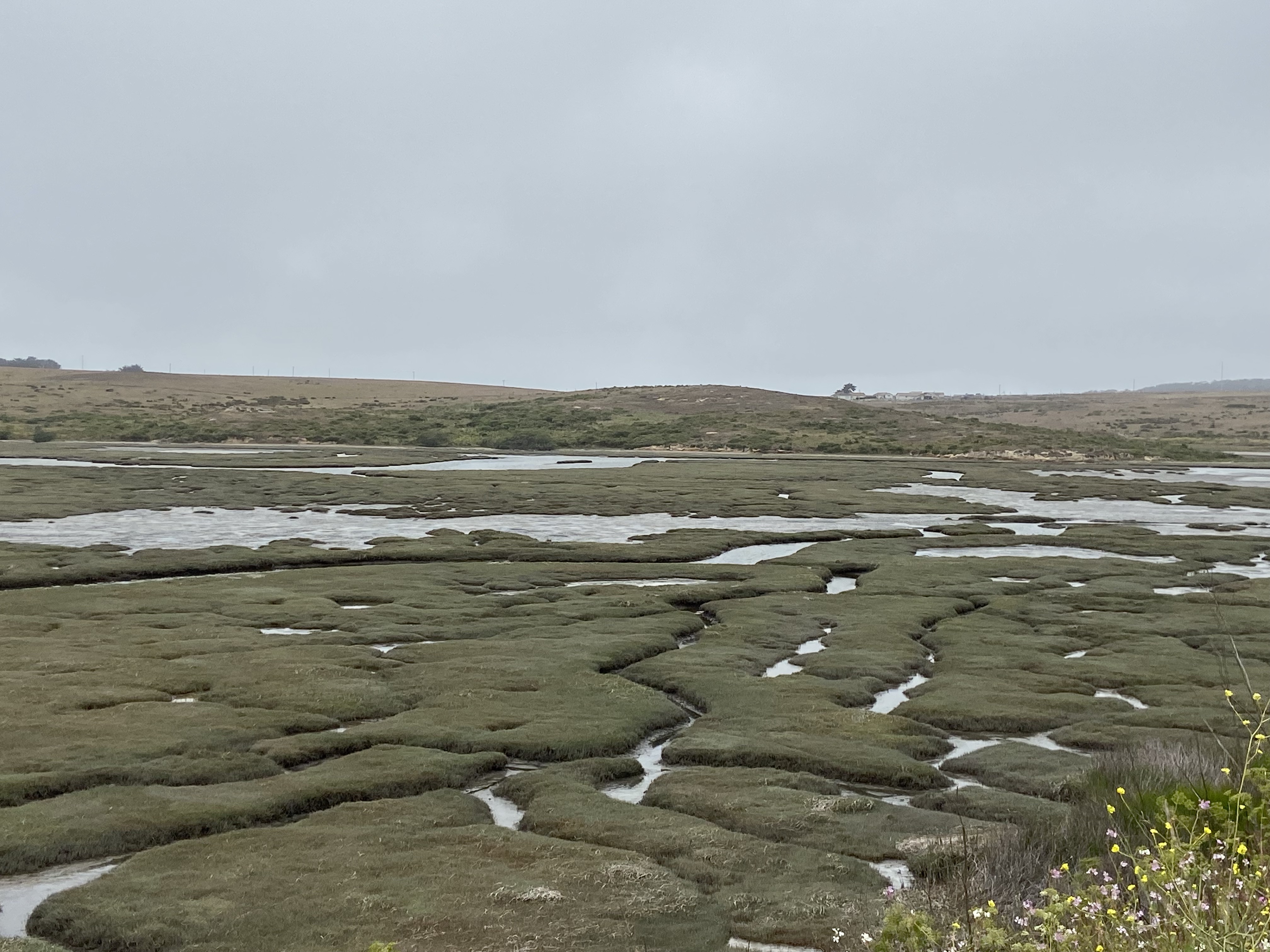
Finally, we also visited an inland waterway that was set in a lowland area on the peninsula. The plant life here was different than in other places. The variations in the land and water was beautiful, as it led to a sandy beach and then the ocean. As we drove to and from this lowland area, cows blocked our path, giving us a close-up view of the locals.
Point Reyes is made up of beautiful rolling hills, soaring rocky shorelines, interesting and abundant plant life, and myriad animals. The seashore is such an intriguing, almost mysterious place, and makes one feel small–many of the elements making up the landscape are large, especially the enormous Pacific Ocean that surrounds much of the park. The dense fog that often fills the park further lends an eerie sensation. Visiting Point Reyes was such an interesting and enjoyable experience–we highly recommend it.
 A Living Scrapbook