
Tags
The year 1000 A.D. marks the beginning of the Mississippian period in American history. While this date is not firm, the next five hundred years would see the rise of a complex society, concentrated along the Mississippi River, but extending well beyond its waters into other areas of the Midwest and Southeast, and with trade networks that extended far beyond its borders. This period is marked by the building of mounds, which served a variety of purposes. Unfortunately, many of these mound sites no longer exist, as farming and development destroyed the mounds. However, other sites are preserved in some capacity, either through the National Park Service or through more local efforts.
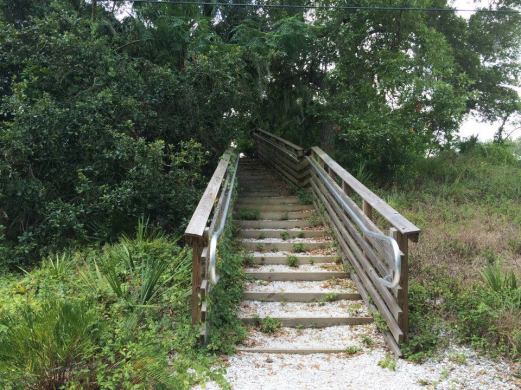
One such site is Pinellas Point Temple Mound, a single mound preserved in St. Petersburg, Florida in the midst of a housing development. The site is a bit difficult to find, but it is set off by a fence and surrounded by trees and other plant growth. The mound was built by the Tocobaga Indians, a group that lived in the area and built many other mounds. There are a few signs explaining the significance of the mound, the history of the Tocabaga, and their interaction with the Spanish after Europeans began to come to the area. Visitors can also walk around the mound and get an up-close look at its size. While the site is small, we enjoy learning about all aspects of American history, and this site offers yet another example of the significance and size of the Native American population in Florida and throughout North America.
 A Living Scrapbook