Tags
Georgia, Georgia Coast, Lighthouse, Museums, National Park, Savannah, Travel
National Park Week-Fort Week Day 4
Fort Pulaski National Monument preserves a masonry fort built in the early and mid-nineteenth century in order to help protect the United States coast. At the time of its construction, it was technologically-advanced and durable, but the invention of the rifled cannon would change that. Fort Pulaski was part of the Confederacy, and when the Union attacked the fort with rifled cannon, they quickly breached the walls of the fort, causing its surrender. The Union took control of the fort and repaired it. Since they were now stationed along the Savannah River, the Confederacy was no longer able to import or export goods out of Savannah, crippling their war effort.
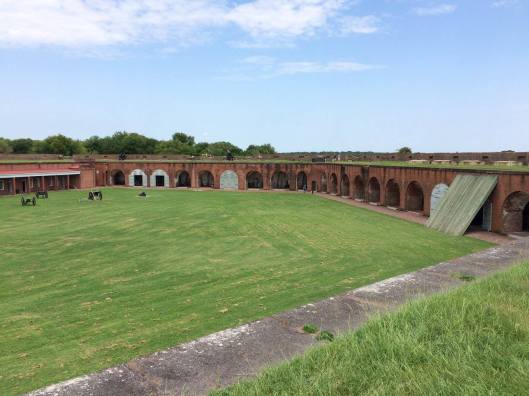
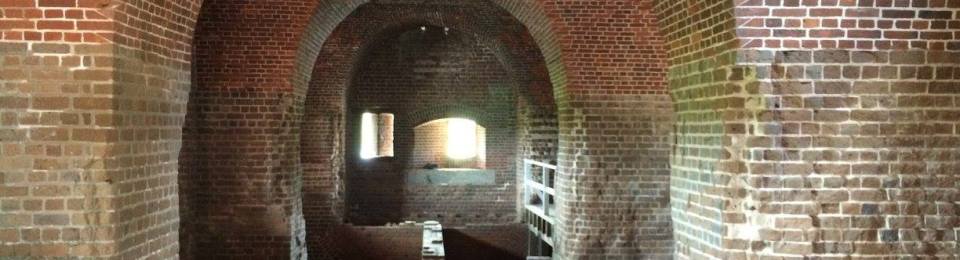
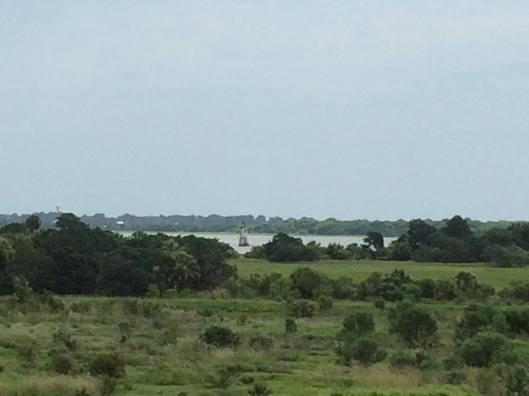
Visitors to Fort Pulaski can first go to the visitor center to learn about the history of the fort and view a short film. Then, visitors can walk into the fort and explore the grounds, seeing the different elements that made up a working fort, including sleeping quarters, storage areas, and officers quarters. Visitors can also stroll along the ramparts of the fort, offering nice views of the surrounding area, including Cockspur Island Lighthouse. While we were there, the park was offering a cannon-firing demonstration, during which several reenacts described and showed what was involved in firing a cannon during the Civil War period. The demonstrators fired a couple rounds, which was very interesting to witness, but was also one of the loudest noises we had ever heard. Afterward, we walked around the outside of the fort, where we were able to see several of the cannon balls and shrapnel still embedded into the walls of the fort from the Union siege in 1862. Seeing the holes and cannon balls in the wall really added to the sense of history we felt there.


Fort Pulaski was a fun, interesting place to visit and is the perfect place to go for families, history buffs, and even beach-goers looking for a fun respite from the sand.
 A Living Scrapbook