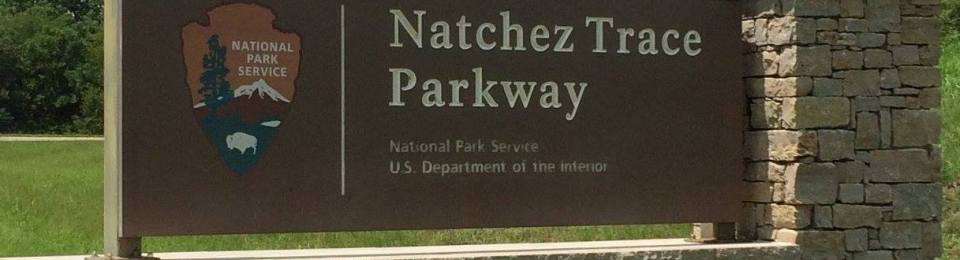
The Natchez Trace was a well-traveled roadway running from modern-day Nashville, TN to Natchez MS that had been used for centuries by Native Americans. After European settlers arrived, traders would ride flatboats down the Ohio and Tennessee Rivers to the Mississippi River, sell their goods in New Orleans, and then walk up the Natchez Trace to return home. The Natchez Trace has witnessed plenty of American history, but it is perhaps best known as the location where famous explorer Meriwether Lewis mysteriously died in 1809.
Only portions of the original Natchez Trace remain (which you can hike along at different portions of the Parkway), but a road follows the approximate route of the old road. Visitors can drive any or all of the road and take a trip back in time, looking at the area where people have travelled for many centuries. Billboards and advertisements are not allowed along the road, so the views are largely unobstructed and better approximate what the road would have looked like. The Natchez Trace has a number of sites to see along the road, which they label on their websites and on maps that they give visitors. Because of that, the best place to start is one of the visitor centers along the road. We stopped at the Parkway Visitor Center, which had a small but informative visitor center. After that, we traveled up the Parkway to Brices Cross Roads NBS. The scenery along the road was beautiful, and while we didn’t get to travel along a large stretch of the road, we enjoyed our time so much that we are already planning on returning and driving the length of the Natchez Trace in the future.
 A Living Scrapbook